
Let me be upfront about something. When I first started seeing the SS26 runway recaps; the power shoulders at Schiaparelli, the pencil suits at Elie Saab, the gold hardware literally everywhere; my first thought was "cute, the pendulum swung." That's what fashion does. Quiet luxury runs its course, maximalism comes back, everybody writes a think piece. Cycle closed.
But the more I sat with it, the more I realized that framing was too easy. Because this '80s revival isn't just fashion doing its thing. It's fashion doing what it's always done in moments of political tension: holding up a mirror. And if you look closely at what's reflected, it's a conversation we've been having for over forty years that we still haven't finished.
So let's actually get into it.
First, What Was Power Dressing Even About?

I think a lot of us carry this vague understanding that shoulder pads = the '80s = ambition, and leave it there. But the context matters a lot here.
The original power dressing movement wasn't born from an aesthetic mood board. It was born from necessity. As more women entered the workforce and began moving into managerial and executive positions, they needed a way of dressing that communicated not just competence, but authority and respect. Fashion Up Today The corporate world was — and let's be clear about this — a space built entirely by men, for men. The suit was men's visual language for power. So women borrowed it, restructured it, padded the shoulders out, and walked into boardrooms wearing the clearest signal they could: I am serious. Treat me accordingly.
Between 1982 and 1987, the power suit took the focus off a woman's gender and on to what she could achieve — a uniform to demand respect, authority and power in a corporate setting. PERSPEX
That's not nostalgia. That's strategy. And it was working within a very specific political climate — the Reagan era, with its resurgence of traditional capitalist values and its promotion of personal success as the ultimate goal. Fashion Up Today Conservative politics, economic boom, a workforce that was opening up to women but not exactly rolling out the red carpet. Sound familiar?
Here's Where It Gets Interesting

Courtesy of Stella McCartney
Dr. Elizabeth Way, the curator of costume and accessories at The Museum at FIT, draws the parallel directly: "A swing toward conservative politics dominated the 1980s social and cultural landscape, which promoted more traditional fashion trends, including tailored men's suits and preppy styles." Marie Claire
Now look at 2026. Conservative politics creeping back into mainstream culture. Economic uncertainty. Women navigating institutions — professional, political, social — that still weren't designed with them fully in mind. The current political and cultural landscapes aren't an exact repeat of forty years ago, but they're a close rhyme. Marie Claire
And fashion, as it always does, is responding. After seasons of minimalism and muted palettes, the fashion landscape is embracing bold self-expression and unapologetic indulgence — maximalism is taking many forms, from '80s-inspired power glam to styles that demand attention. Marie Claire
I want you to pause on "demand attention" for a second, because I think that's the emotional core of this whole thing. Quiet luxury was, among other things, a retreat. It was dressing that didn't ask for anything, didn't assert anything, just existed in tasteful, expensive peace. The fact that we're collectively swinging away from that right now, toward clothing that demands to be seen, tells us something about the moment we're in. We're not in a retreat mood anymore.
But Here's My Issue With the Glamoratti Moment
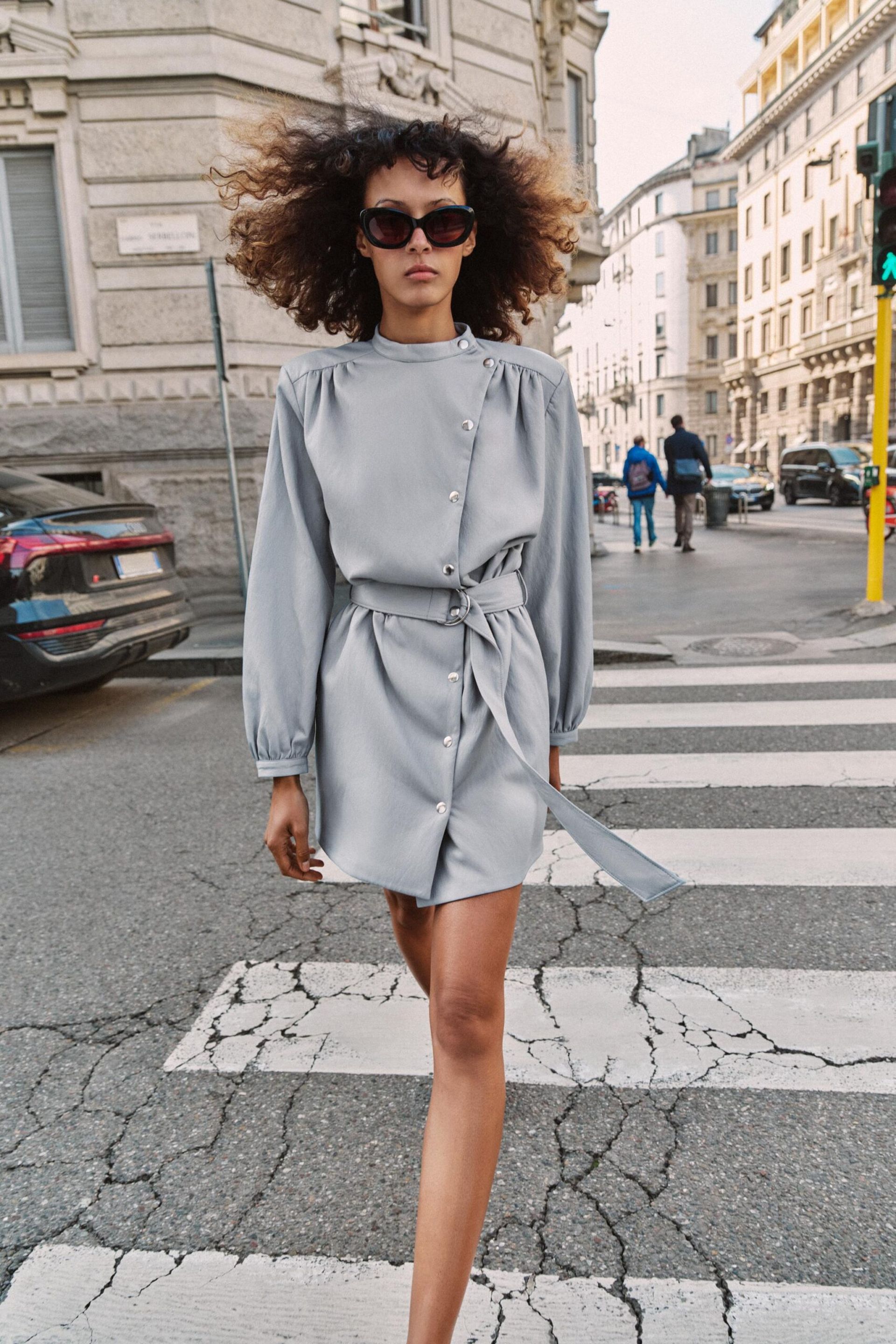
I love a power shoulder as much as the next person. But I think we need to be honest about what this revival is doing, versus what the original was doing; because they're not the same thing.
In the 1980s, women wore the power suit because they were fighting their way into spaces. It was purposeful. It was almost militant in its intention. The power suit was a direct response to the desire to gain authority and autonomy in environments that had historically excluded women. PERSPEX
In 2026, those same silhouettes are arriving on runways draped in nostalgia and sold as glamour. Which begs the real question: are we power dressing or are we performing power dressing?
The return to maximalism allows consumers to embrace a more personalized style and a return to fashion as a vehicle for expression, Women as one industry insider put it. And yes — but expression of what, exactly? This is the question I think is worth sitting with. Because there's a difference between dressing to feel strong and dressing to signal that you remember when women dressed to feel strong. One is armor. The other is a costume.
Gold, according to WGSN's head of womenswear, symbolizes stability in uncertain times; a renewed appetite for opulence after seasons dominated by minimalism. Marie Claire And I think that's genuinely it, darling. We are reaching for the visual language of a prosperous, assertive decade because the present feels uncertain. It's comfort dressing in a power suit's clothing. There's nothing wrong with that — but let's call it what it is.
What the Designers Actually Get Right

Now, here's where I want to give credit where it's due, because the best designers working this season are doing something more sophisticated than pure nostalgia.
At Givenchy, Sarah Burton rallied against the idea that power dressing for women means simply donning a man's suit. Wallpaper* That one line from her show notes is doing more analytical heavy lifting than most trend pieces written this season. Because Burton is pointing at the original problem; that power dressing borrowed from men because women didn't yet have a visual language of power that was entirely their own; and refusing to repeat it. That's not a trend decision. That's a design philosophy.
And then there's what Matthieu Blazy did with his Chanel debut. Gray flannel suits reimagined with frayed wrap skirts, sheer bouclés, lavishly embroidered organza, pearls and camellias woven together into something both reverent and refreshingly modern. Modern Luxury He took the structural confidence of '80s tailoring and ran it through a lens that acknowledges how much the woman wearing it has changed. The suit is still there. But it's not performing anything. It's just very, very good clothes.
The notes accompanying Anderson's debut Dior womenswear collection spoke of "an empathy with history, a willingness to decode its language — not to erase it, but to store it." Grazia That's the spirit I think is worth holding onto as consumers too. Not erasing the past, but being clear-eyed about why you're reaching for it.
So What Does This Mean for How You Actually Get Dressed?

Courtesy of @themermaidfashion
Because ultimately this is WardrobeHQ and I'm not just here to analyze, I want this to be useful to you.
The '80s revival is genuinely offering something valuable right now: permission to take up space. To dress with intention and visibility. To move away from dressing as an apology and toward dressing as a statement. That's worth embracing.
But I'd encourage you to ask yourself whose statement it is. Are you reaching for the power shoulder because it makes you feel like yourself, expressed loudly? Or because the internet told you that's what power looks like this season? Those are very different starting points, and they'll lead to very different wardrobes.
The women who did power dressing best in the '80s weren't following a trend. They were solving a problem with their closet. The women doing it best in 2026 are the ones who understand that history, see the moment clearly, and dress from that clarity; not just from a mood board.
That's the difference between trend-chasing and having a point of view. And that point of view? Nobody can sell it to you.
If this kind of deeper fashion analysis is what you are looking for, then you need to be on the WardrobeHQ newsletter. Every week I go beyond the trends and into the why behind what we wear, because understanding fashion at that level is what actually changes how you dress and how you feel in your clothes. Subscribe below and join a community of women who take their wardrobes seriously. You will not regret it.
